ServicesSolar Repair
Solar Repair in Grapevine
When your panels go quiet or your production numbers drop, we find out why. We test the inverter, the wiring and every panel, show you what we found, and give you a clear repair plan before we touch anything.
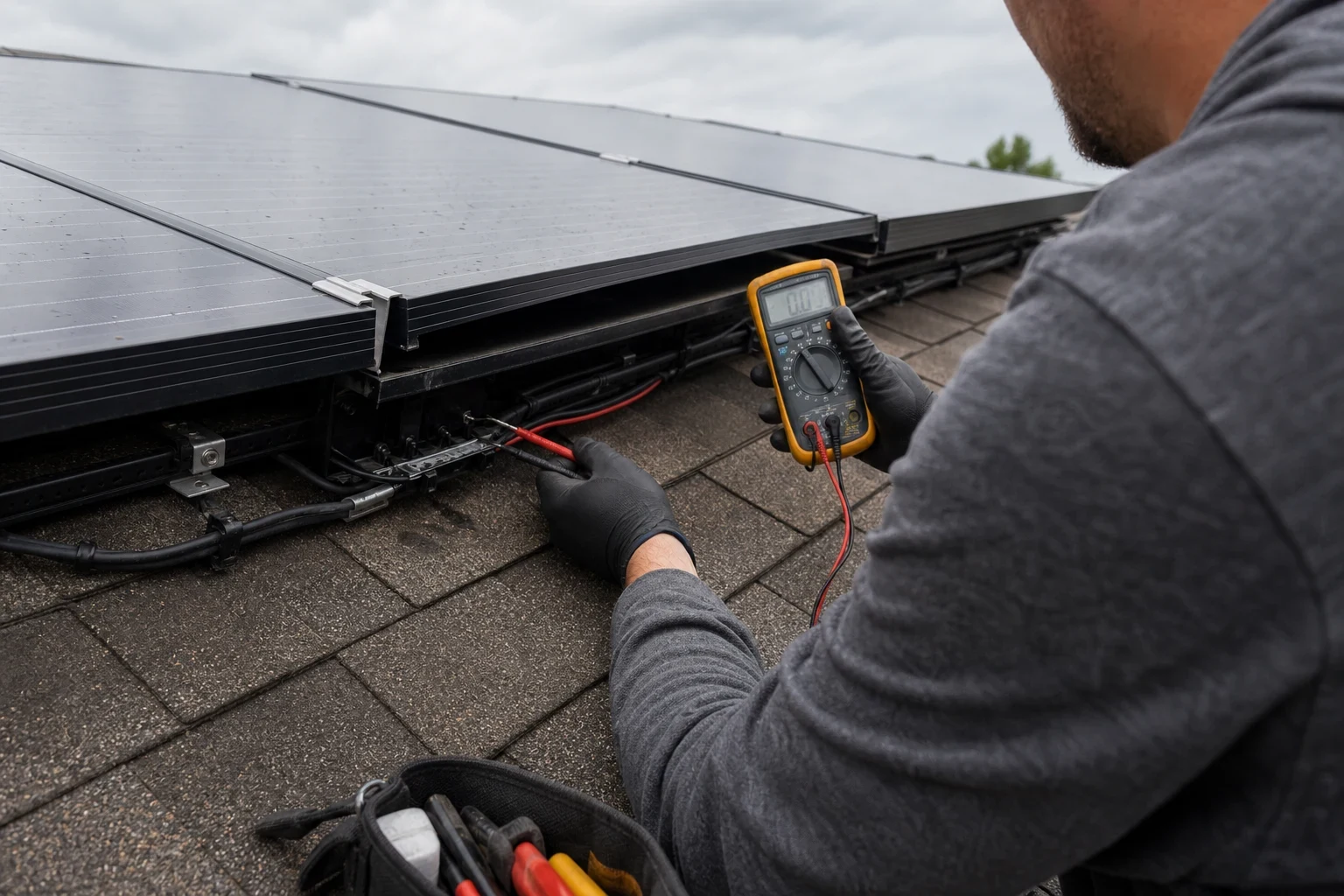
Getting a system back to full production
A solar system can stop working for small reasons and big ones. A tripped breaker, a loose connector, a failed microinverter or a panel cracked by hail can all look the same from the ground: a lower number in your monitoring app, or no number at all.
Our job is to track down the real cause rather than guess and start swapping parts. We work on systems no matter who installed them, including ones whose original company has gone out of business. When a simple fix will do, you will hear that from us. When a component is wearing out and changing it during this visit would spare you a return trip later, we lay out that choice and leave the decision with you.
Repair is the right call when the panels and racking are mostly sound and one piece of the system has failed. If your array needs moving or expanding, our solar panel installation page covers that work.
What a solar repair visit covers
- Inverter testing and replacement
- String inverters and microinverters are the parts most likely to fail, especially after years of summer heat. We read the error codes, test output and replace the unit if it has failed.
- Panel inspection
- We look for cracked glass, hot spots, burn marks and delamination. Hail is the usual culprit after a spring storm, but some damage comes from debris or simple age.
- Wiring and connector repair
- Squirrels and other critters like to chew the cables tucked under panels. We repair damaged runs, replace corroded or loose connectors and add critter guard where it helps keep them out.
- Racking and mount checks
- We check that rails, clamps and mounts are tight and that panels sit where they should. Loose hardware lets panels shift in strong wind.
- Monitoring fixes
- Sometimes the system is fine and the monitoring is not. We reconnect gateways and check that what you see in the app matches what the panels are producing.
- Photos and a written plan
- Every visit ends with pictures of the problem and a written repair list, so you can see exactly what we saw up on the array.
Signs your system may need fixing
Production dropped and stayed low
Overcast weeks naturally cut output. When the numbers stay low through a run of clear, sunny days, a panel, the inverter or a connection has probably failed.
A fault shows on the inverter
A status light in a new color or an alert that keeps popping up in your app points to a problem. Jot down the code before you call, since it often takes us straight to the cause.
Visible damage after a storm
Following hail or high wind, cracked glass, a panel sitting crooked or debris wedged under the array should get checked before the next rain.
Critters living beneath the panels
Chewed cables, nesting material or droppings near the array tell you animals have moved in underneath.
Bills going up while use stays flat
If your electric bill climbs while your household uses roughly the same power, the system may be making less than it used to.
From your first call to the restart
- 1
Start with a call
Describe what you are noticing, plus any readings from your monitoring app or codes showing on the inverter. Those details tell us which parts and test gear to bring along.
- 2
Testing on site
We shut the system down safely, then test the inverter, the strings and individual panels. Most of the work happens outside at your home, and we only need inside access if your inverter or main panel is in the garage.
- 3
An honest explanation
We show you photos and readings, then walk you through repair options and what each one costs. Nothing gets replaced until you say yes.
- 4
Fix, restart and verify
Once you approve, we complete the fix, bring the system back online and watch the readings until output is back where it belongs. Any permit or utility paperwork the job needs is on us, and we tidy the work area before heading out.
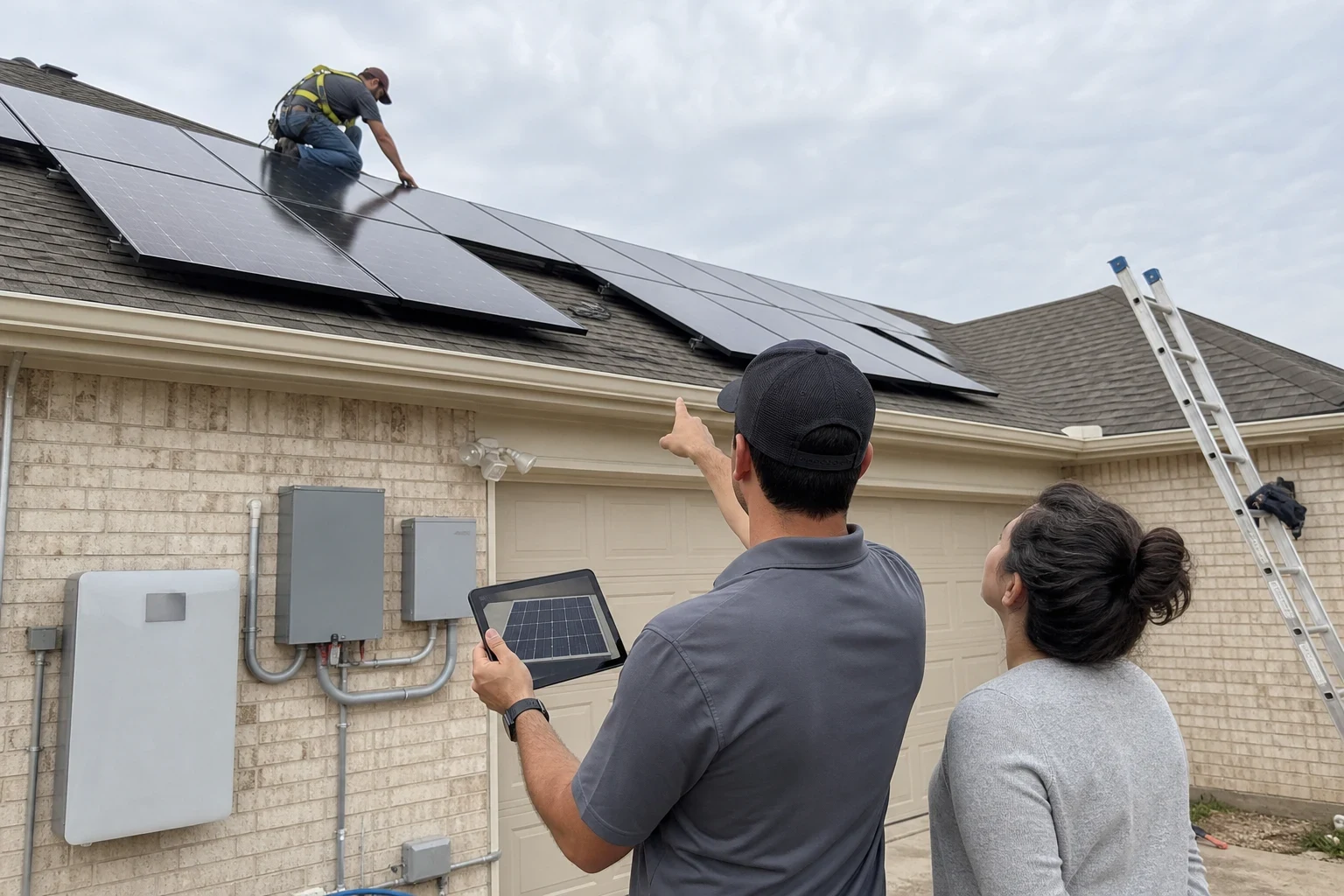
What affects the cost of a repair
The price of a repair depends mostly on which part gave out and how much work it takes to get to it. After testing, we give you a line-by-line price so you know what you are paying for before anything starts.
- The part that failed
- A loose connector is a quick fix. A replacement string inverter or a batch of microinverters costs more, and availability of a matching model can matter on older systems.
- Roof pitch and access
- Steep roofs, two-story homes and panels in hard-to-reach spots take more time and safety setup.
- How many panels are affected
- One cracked panel after a storm is a different job from a row of damaged ones. Getting to a panel in the middle of an array can mean removing its neighbors first.
- Equipment age and warranty status
- Some parts may still be covered by the manufacturer. We check what your equipment warranty covers and help you file the claim with the manufacturer.
Solar repair questions
Something not covered here? (817) 318-6892
Can you fix a system that a different installer put in?
We can. We service most panel and inverter brands regardless of who handled the original install. Any paperwork from that first job is helpful, though we can get started without it.
Is hail damage covered by my homeowners insurance?
Many homeowners policies treat rooftop panels as part of the house, though coverage varies from one policy to the next. We take photos of the damage and write up what needs repair, which you can pass along to your insurance company. The coverage decision belongs to your adjuster.
Should I repair or replace my system?
If the panels are in good shape and one component failed, repair almost always makes more sense. If the system is older, has several failing parts and is producing far less than it once did, we will lay out both options honestly so you can compare.
Is it safe to leave a damaged system running?
A cracked panel or exposed wiring can be a hazard, especially in wet weather. If you see damage, turn the system off at the disconnect if you know how, and call us to talk through next steps.
Do you also clean panels while you are up there?
We can. Dust and pollen build up through long dry spells, and a cleaning can be added to a repair visit. Our panel cleaning page has more on that service.
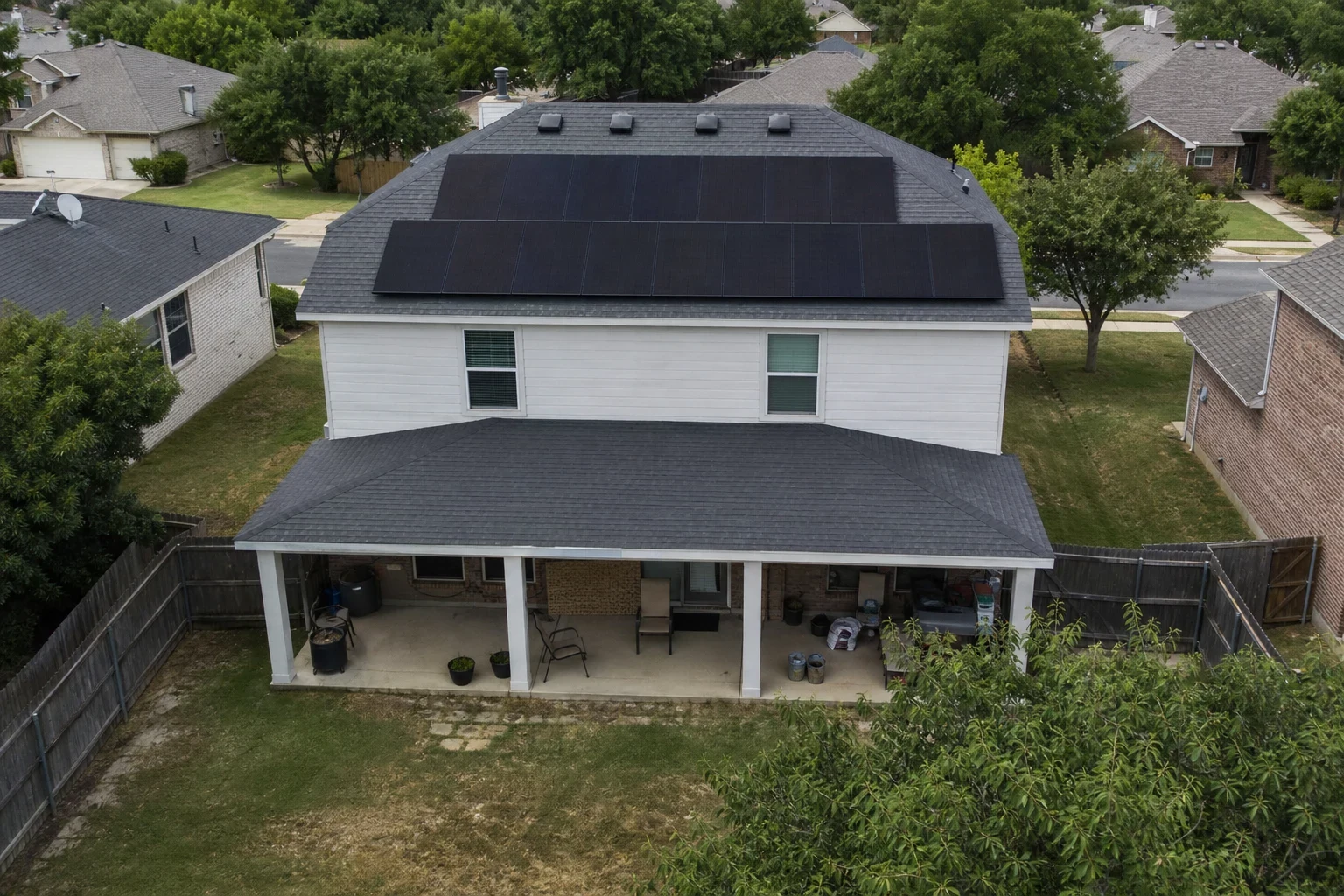
Get your panels producing again
Tell us what your system is doing and what your app shows. We serve Grapevine and nearby towns like Southlake, Colleyville and Euless, and we will explain what we think is wrong and how we would fix it.