ServicesBattery Storage
Battery Storage in Grapevine
Your panels make the most power at midday, often when you need it least. A battery holds onto that surplus for the evening or for the next time the grid goes out. We size it to your needs, install it neatly and walk you through how it works.
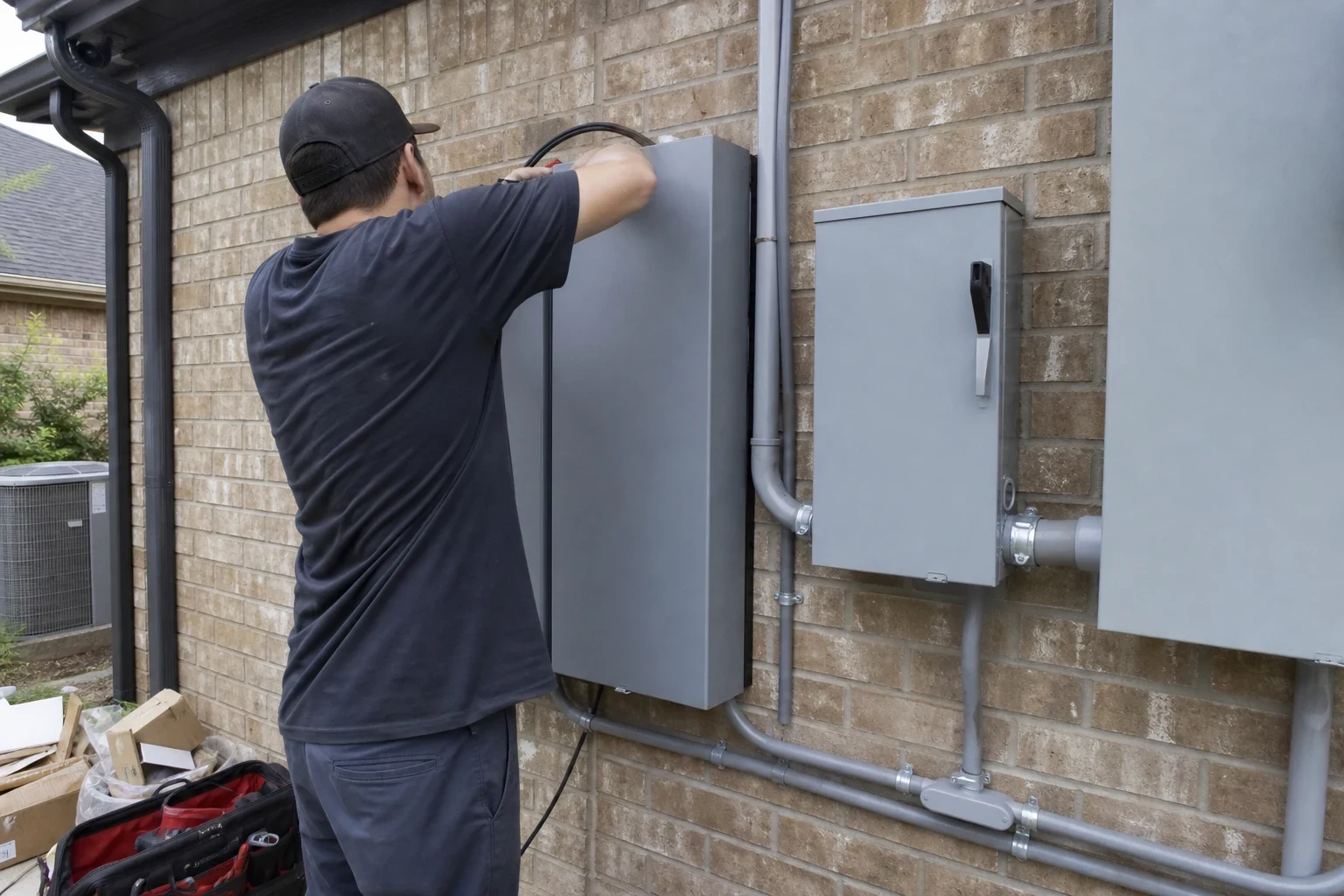
What a Home Battery Actually Does for You
Solar panels only produce while the sun is up. Without a battery, extra daytime power goes back to the grid, and in an outage most grid-tied systems shut off for safety even on a bright afternoon. A battery changes both of those. It holds your surplus for the evening and, with the right backup setup, keeps chosen circuits running when the lines go dark.
In North Texas, outages tend to come with spring thunderstorms and the occasional hard winter freeze, so many of our customers want the fridge, the Wi-Fi, a few lights and a bedroom fan covered. Others care more about using their own power after sunset instead of selling it back cheaply under their electricity plan. We start by asking which matters to you, because that answer decides the size and the wiring.
A battery can go in with a new solar panel installation or be added to a system you already have. If your existing panels are underperforming, we may suggest a look from our solar repair side first, so the battery has something worth storing.
What Our Battery Storage Work Includes
- Load review and sizing
- We go through what you want powered and for how long. That tells us the storage capacity and the power output you need, so you are not paying for more battery than your home will use.
- Backup circuit planning
- Most homes back up a protected subpanel rather than the whole house. We help you choose which circuits go on it, such as the refrigerator, garage door, internet and bedroom outlets, and explain what stays off during an outage.
- Mounting and placement
- We find a spot that suits the unit's temperature limits and clearance needs, usually a garage wall or a shaded exterior wall. Placement also keeps cable runs short and tidy.
- Electrical and inverter work
- We connect the battery to your solar system and your main panel, including the transfer equipment that isolates your home from the grid during an outage. That keeps line workers safe and your backup working.
- Permits and utility approval
- Our crew handles the city permit, books the inspection and takes care of the interconnection forms your utility requires. You won't have to chase any of it.
- Walkthrough and app setup
- Before we leave, we show you the monitoring app, how to read your charge level and what happens when the power goes out.
When a Home Battery Is Worth Adding
Storms leave you in the dark
If a bad night of weather has cost you a fridge full of food or left phones dead by morning, stored power covers the basics without a loud generator in the yard.
Your solar shuts off when the grid does
Standard grid-tied systems go dark in an outage. A battery with backup wiring lets your panels keep recharging it during daylight.
Your buyback rate is low
If your plan pays little for the power you send back, storing it and using it after sunset can stretch the value of your panels.
Some equipment can't go without power
A CPAP machine, a work-from-home desk or a well pump are all things you would rather not lose in a storm. A battery keeps that short list of circuits fed until the grid comes back.
You are adding panels anyway
Installing a battery alongside new panels means one round of electrical work, one permit and one inspection.
How a Battery Installation Goes
- 1
Start with a call
Tell us what kind of panels you have, if any, and what you hope a battery will handle. We'll also ask about your monthly bills and how often the power has gone out on your street.
- 2
Site visit and design
We look at your main panel, the mounting spot and your solar equipment. You get a written estimate that lists the battery, backup circuits and electrical work line by line.
- 3
Permit and scheduling
We take care of the permit with the city and agree on an install date that works for you. Most batteries go in within a day, with your power off for only part of it.
- 4
Install day
We mount the unit, wire the backup subpanel and connect everything, keeping the work area clean as we go. We test the system by simulating an outage so you can see it switch over.
- 5
Sign-off and handoff
Once the inspector has signed off and your utility gives permission to operate, we bring the battery fully online. Then we sit down with you and show you around the monitoring app.
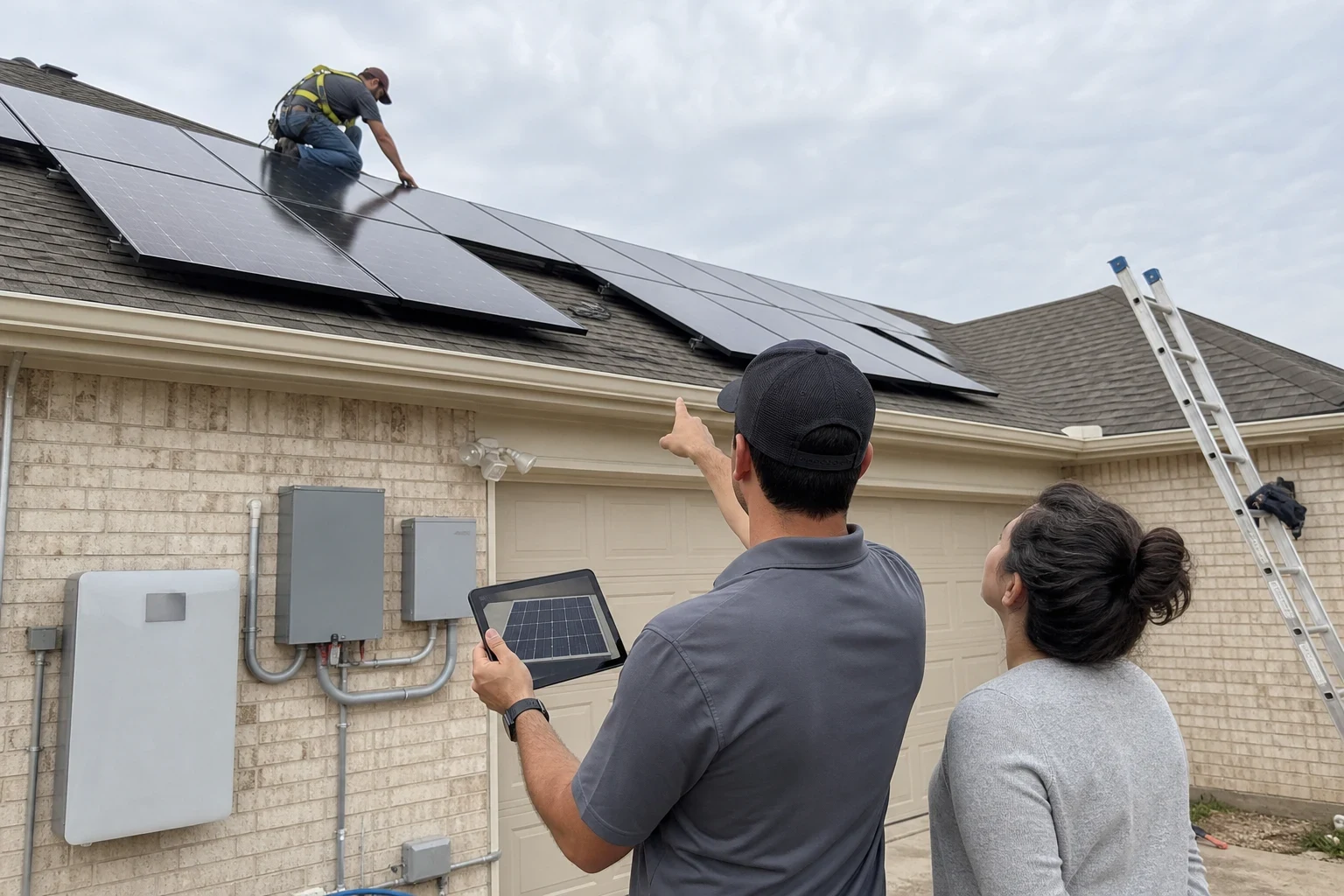
What Affects the Cost of Battery Storage
Battery pricing depends mostly on how much backup you want and how much electrical work your home needs to support it. We price each job after seeing your panel and your goals, and the written estimate shows where every part of the cost comes from.
- Storage capacity
- More kilowatt-hours means longer runtime and a higher cost. Covering a few essentials takes far less storage than running central air.
- Whole-home or partial backup
- Backing up a small subpanel is simpler than backing up the entire house, which may need larger equipment or more units.
- Your existing electrical panel
- Older or full panels sometimes need upgrades or extra space for the backup connection, which adds labor and parts.
- New or existing solar
- Adding a battery to an older system can call for a compatible inverter. Pairing it with a new installation often keeps the wiring simpler.
- Placement and wire runs
- A long distance between the battery, the inverter and the main panel adds conduit and time.
Common Questions About Home Batteries
Something not covered here? (817) 318-6892
Will a single battery run my whole house?
It can, but covering every circuit calls for a lot of storage, and even more with the AC running in midsummer. Most people choose a short list of must-have circuits, which stretches one charge much further. We help you decide which ones earn a spot.
I already have panels from a few years back. Can I add a battery?
Usually, yes. A few older inverters were not built to work with storage, so we look at your equipment before we price anything. If yours can't connect, we explain each option and what it takes so you can choose.
How many hours of backup will I get?
It comes down to the battery's size and what's plugged in. A modest setup can keep a refrigerator, lights and Wi-Fi going overnight, and the panels refill it once the sun is up. We work out runtime figures based on what your home actually draws.
Where will the battery be mounted?
Usually on a garage wall or a shady exterior wall close to the main panel. We stay out of direct afternoon sun because heat wears batteries down faster, and we leave the clearances the inspector looks for.
Do batteries make noise or need upkeep?
They run nearly silent, with at most a soft fan. You won't store fuel or change oil. The app lets you keep an eye on its condition, and if anything seems wrong, our solar repair crew can check it out.
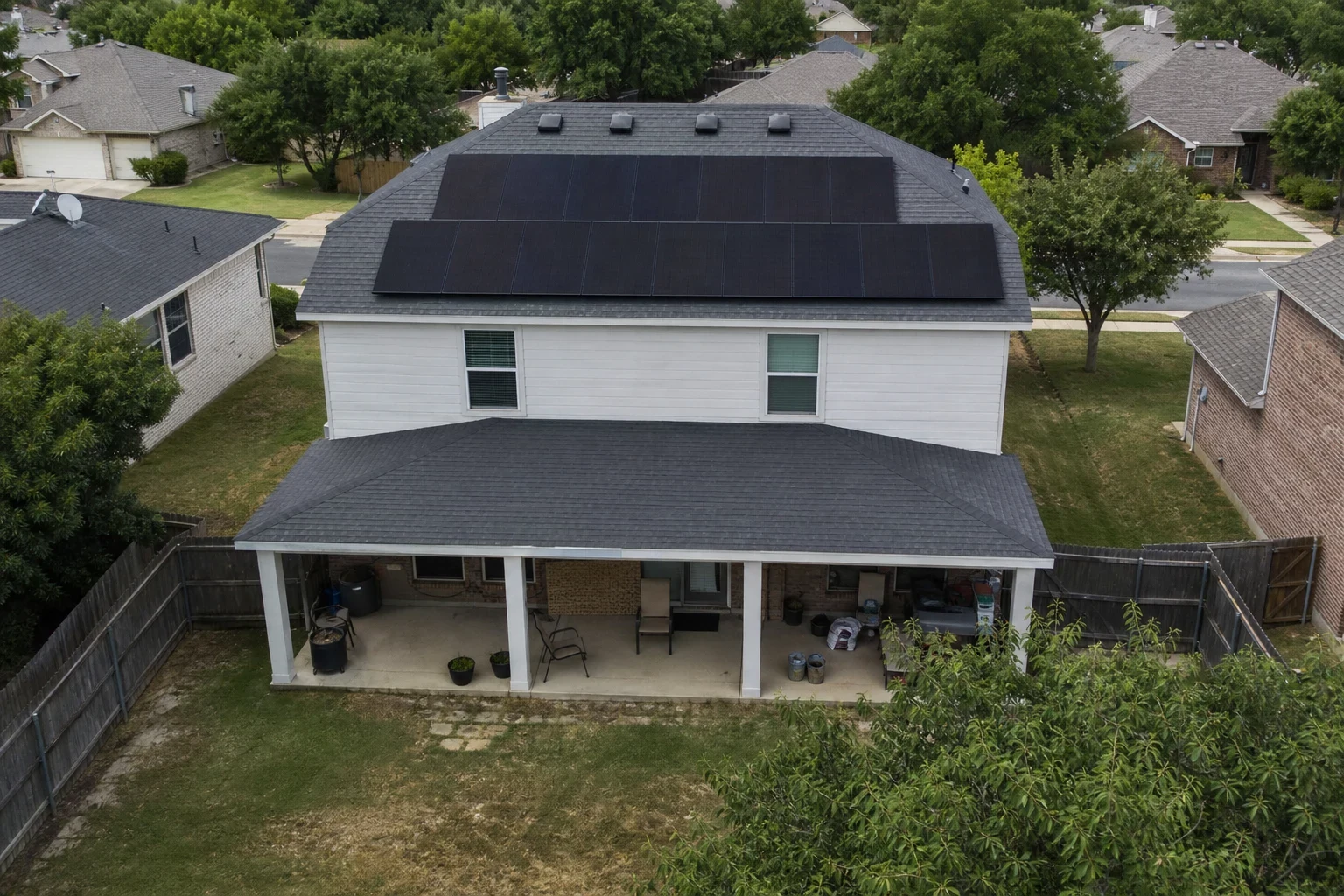
Keep the Lights On With Power You Made
Tell us what you want covered when the grid goes down, and we will talk through the battery size and setup that fits your home.