ServicesSolar Panel Installation
Solar Panel Installation in Grapevine
We design solar for your home from your own electric bills and your roof's real layout, then handle the permit, the installation and the utility approval. You get a system sized to what you use, with clear answers at every step.
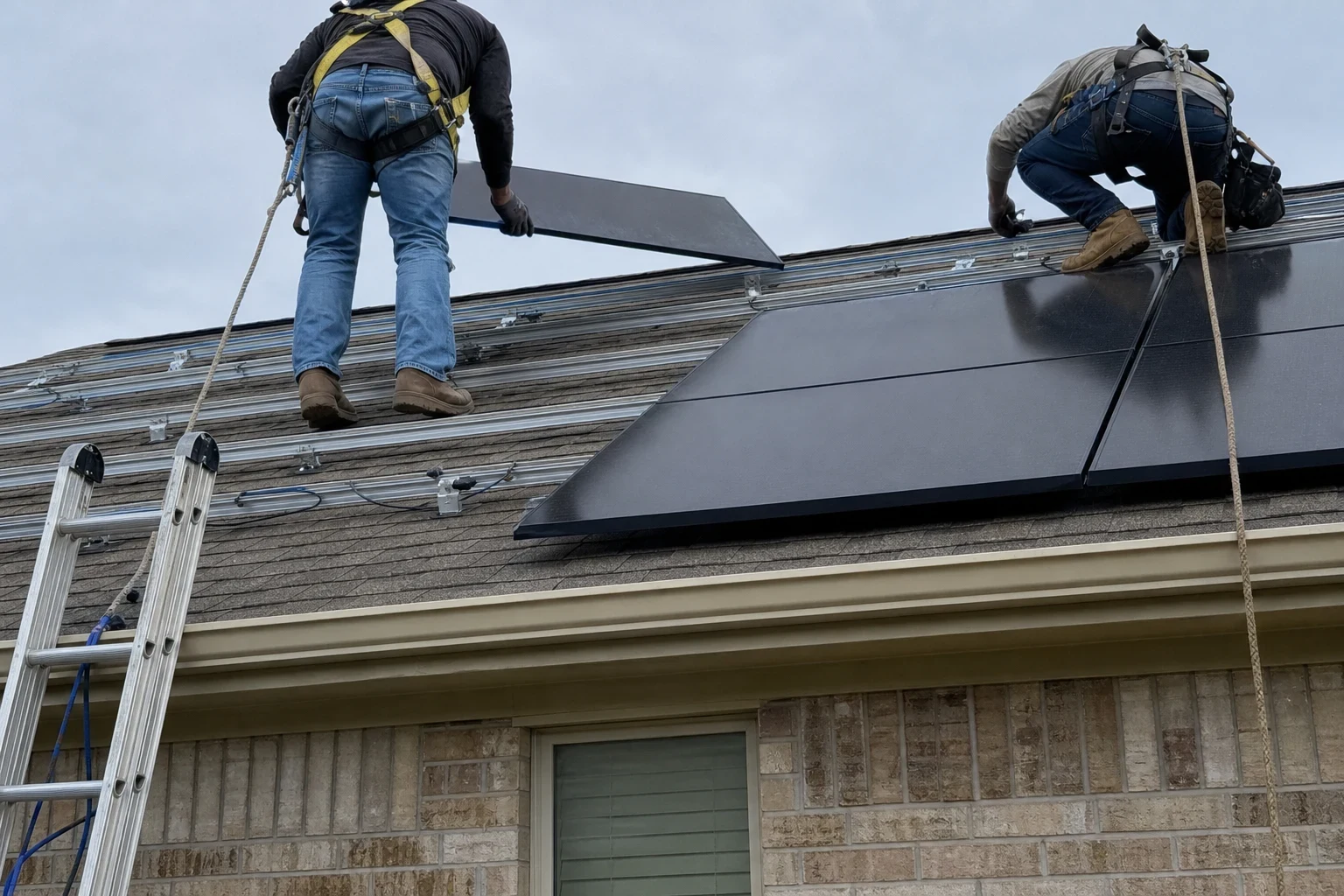
A system built around your bills, not a panel count
Solar panel installation covers the whole job of putting a working system on your home: sizing it from your electric use, designing the layout, pulling the permit, mounting the panels, wiring the inverter and getting approval to turn it on. We handle each step and keep you posted as it happens.
It tends to be the right call when your summer bills climb every year and your roof has good years left with decent sun on the south or west side. If your roof is close to needing replacement, we will tell you before anything is designed. Taking panels off later so the roof can be redone costs you time and money.
Many homes here have hip roofs split into several smaller planes, so layout matters. We place panels around vents, valleys and shade from mature trees instead of covering every surface just to raise the count.
What your installation includes
Usage review and sizing
We go through twelve months of your electric bills to size the system to how your home actually uses power. Heavy cooling months get weighed properly, so you are not sold more panels than you can use.
Roof check and layout design
Before we design anything, we look at shingle condition, decking and rafter spacing, from the attic when we can get in. You see the proposed layout and the expected production from each roof face.
Permits and utility paperwork
We apply for the city building permit, book the inspection and prepare everything your utility needs before it will connect the system. If a form needs your signature, we bring it to you and track down the rest ourselves.
Mounting and flashing
Each roof attachment is fastened into a rafter and flashed so water sheds around it, not into it. Racking is set to keep panels level with an air gap underneath, which helps them run cooler in hot weather.
Inverter, wiring and monitoring
We install the inverter or microinverters, run conduit neatly along the house, add the required disconnects and set up monitoring so you can check production from your phone.
Walkthrough and cleanup
Once the system is live, we show you how it works and what the app numbers mean. Packaging, wire scraps and fasteners leave with us.
How to tell solar suits your home
Your summer bills rise every year
When July and August bring your biggest bills, that's also when panels produce the most. A properly sized system pays off in exactly that overlap.
Your roof still has life in it
Panels stay in place for decades. Starting on a roof in good shape means you won't pay to take them down and put them back anytime soon.
Sunny south or west roof faces
South- or west-facing planes with little shade from trees produce best. East-facing roofs can still pay off, and we'll show you the numbers side by side.
You're staying put
Solar earns back its cost over several years, so it fits best when you plan to keep living in the house for a long time.
Backup power may come later
If a battery isn't part of today's plan, we can still lay out the system so one is easy to add down the road.
How your installation runs from first call to switch-on
- 1
Phone conversation and site visit
It starts with a phone call where we ask about your monthly power use, how old your roof is and what you want solar to change for your household budget. Then we visit to measure, check the roof and look at your main electrical panel.
- 2
Design and permits
You get a layout, a production estimate and a written line-item estimate to review. Once you give us the go-ahead, we take the permit to the city and handle the utility application for you.
- 3
Installation day
Most homes are done in one or two days. We set ladders and materials away from walkways and plants, mount the racking, set the panels and wire everything to the inverter. Your power stays on for nearly the whole visit, with a short shutoff to make the final connection.
- 4
Inspection and permission to operate
The city inspects the work, then the utility approves the connection. Only then do we turn the system on and walk you through it.
What drives the cost of your system
We price each system from its own design and walk you through every line instead of guessing at a number on the phone. These are the biggest factors in the final total.
- Size of the system
- Each added panel raises the upfront cost. Basing the size on what you really use means you don't pay for capacity that sits idle.
- Roof shape and how easy it is to reach
- One big sunny roof face goes faster than a hip roof broken into small planes, a steep pitch or a two-story climb.
- Panels and inverters
- Higher-output panels carry a higher price each, and one central inverter costs differently than a microinverter on every panel. How you want to track production also matters, and we explain the tradeoffs plainly.
- Your electrical service panel
- An older main panel may not have the capacity or room for the solar connection. We check it at the site visit, so any work it needs is on your estimate from day one rather than a surprise later.
- Permit and utility costs
- Your estimate spells out permit fees, required disconnects and any meter work the utility calls for.
Solar installation questions we hear most
Something not covered here? (817) 318-6892
How long does it take from signing to switching on?
The work on your roof usually takes one or two days. The longer part is paperwork: the permit, the city inspection and the utility's approval. We keep you updated at each stage so you always know what is next.
Will the panels hold up to hail?
Modern panels use tempered glass built to take hail of ordinary size, which matters with North Texas spring storms. Very large hail can still crack glass, so it is worth checking that your homeowners policy covers the system once it is installed.
Do I need a new roof before installing solar?
Not always. We will look at your roof honestly and tell you if it is close to needing replacement. In that case, it is usually smarter to have the roof replaced first and add solar after, so the panels only go up once.
Will solar keep my power on during an outage?
A grid-tied system shuts off during an outage for the safety of line workers. To keep power on, you need a battery. Our Battery Storage page explains how that works.
Can my HOA stop me from going solar?
Texas law generally limits HOAs from banning solar outright, though many can have a say in where panels sit on the roof. We can help prepare the layout drawings your HOA asks to review.
What if something stops working later?
Call us and we will look at it. Our Solar Repair and Panel Cleaning services cover systems after installation, and your monitoring app often shows a drop in production before you notice anything else.
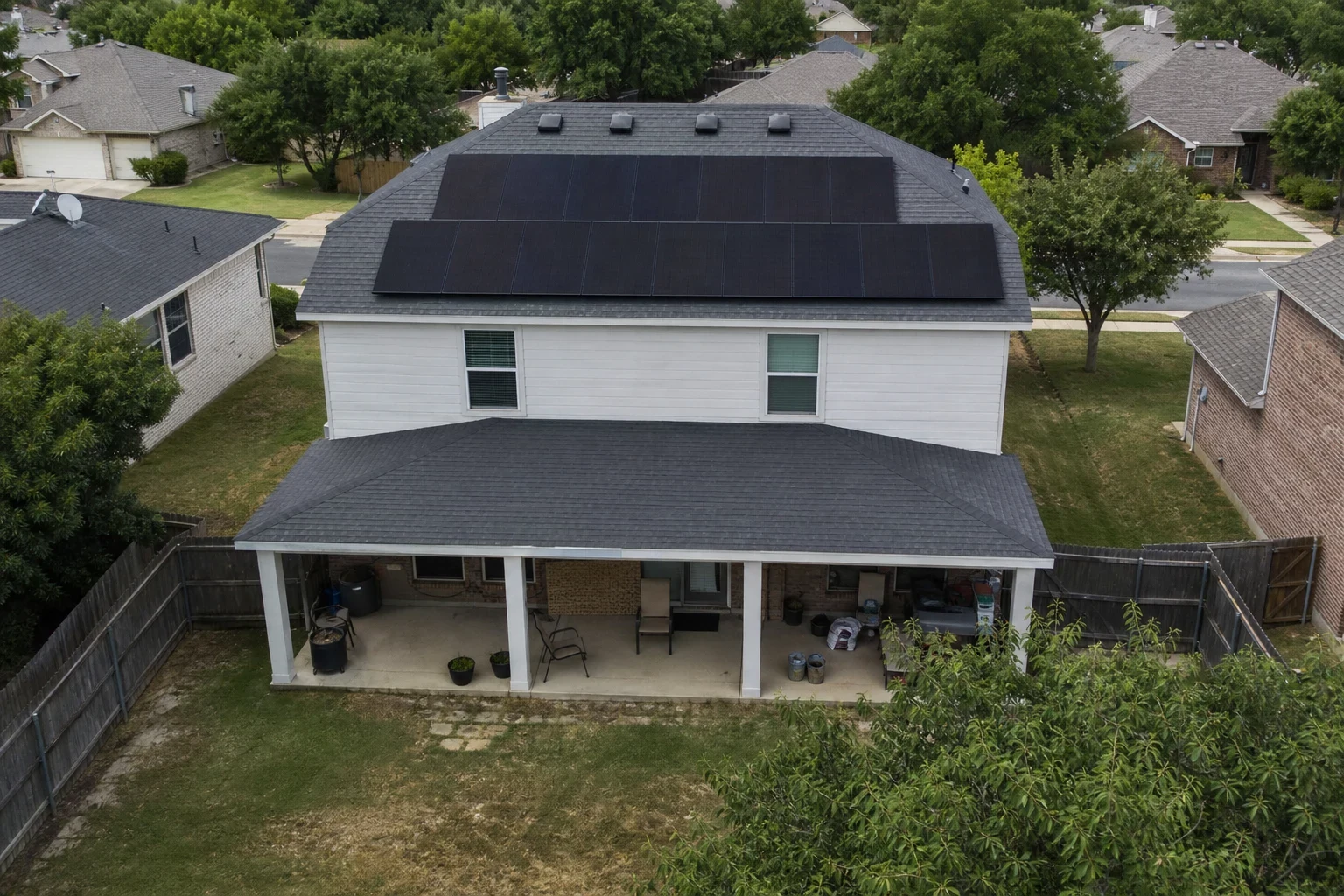
Start with your roof and your bills
Tell us about your home and what you pay for power, and we will talk through whether solar makes sense and what a system could look like.